
When asked what people should know about the Cranbrook Interagency Case Assessment Team (ICAT), both Katie Chave, the Community-Based Victim Services (CBVS) co-chair, and Constable Munro, the police co-chair, agreed that the “relationships we have between each other as colleagues and as people working [across] the anti-violence sector… [are] integral to reducing intimate partner violence in our communities.” The success of the Cranbrook ICAT comes from “the continued consistency and dedication from community partners and our teams” they say, along with the flexibility to make sure the core agencies are able to participate.
Their philosophy of relationship building is a cornerstone of creating effective coordinated responses to intimate partner violence (IPV) that stems back to the 1980s, following the recognition of moving gender-based violence from a private matter to a more public one that needed key systemic reforms.
Recent data shows the pervasiveness of IPV. In BC, 48% of women have experienced IPV since the age of 15. The prevalence of IPV is even higher for certain groups including Indigenous women (64%), 2SLGBTQ+ persons (72%), women with disabilities (62%), women who live in rural areas (54%), and women with a household income of less than $20,000 (55%). Though women are disproportionately impacted by IPV, 39% of men living in BC have also reported experiencing IPV. Equally alarming, approximately 80% of IPV incidents are not reported to police.
Today, ICATs continue an almost 20-year best practice for a coordinated response to IPV across BC. Supported by the Ending Violence Association of BC (EVA BC), ICATs bring together a formal core group of professionals from multiple sectors — including police, victim services, probation, and child welfare — to identify situations where intimate partner violence presents a significant risk of serious harm or death. By ethically sharing information and working collaboratively, ICATs strengthen safety planning, reduce service duplication, manage IPV risk, and connect survivors with coordinated supports. Currently there are over 50 ICATs across BC.
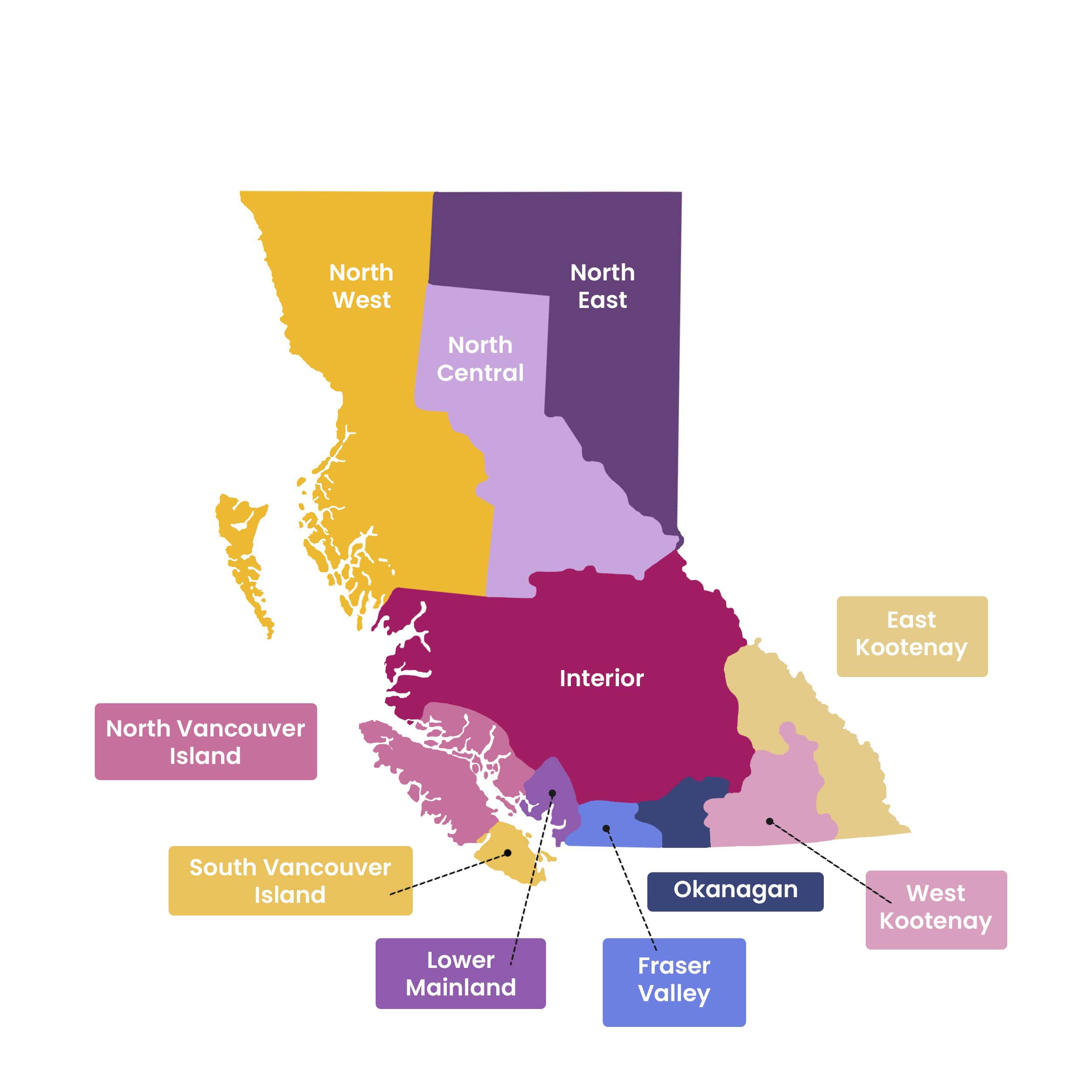
For the Cranbrook ICAT, collaboration extends well beyond monthly meetings. The team serves both Cranbrook and Kimberley, with partners working across jurisdictions to ensure survivors continue receiving support even when they relocate. Constable Munro says, “We’ve been really successful in actually relocating some survivors and they’ve been able to re-establish their lives in new communities. That transition… was only made possible because of the ICAT [and] the collaborative teamwork and succession planning.”
Katie believes those relationships have another important benefit — they help build trust with survivors.
“The trust that we build between each other translates to our clients… their participation [in the ICAT process] and [willingness] to be supported by all of these agencies… is a success in and of itself.”
That trust also enables cross-sector partners to develop a fuller understanding of each situation. By bringing together different perspectives, the team can create more responsive and individualized safety plans for people experiencing significant risk. As Constable Munro notes, “No IPV couple that we’re dealing with is cookie cutter. What may work for couple A is not going to work for couple B.” Instead, every situation requires “a unique approach,” and “having more tools in our toolbox… is going to [lead] to a more successful outcome for our clients.”
Critical to increasing successful outcomes for survivors is ensuring that ICAT members, in particular the ICAT co-chairs, are adequately funded and resourced. “We [attend ICAT meetings] on a volunteer basis”, says Katie. “Everybody at our table is doing this work off the side of their desk because they think it’s important work… [funding] would be so helpful to keep our workloads manageable.”
For years, communities across BC have expressed the need for stable core funding to support community coordination work such as ICATs. In Dr. Kim Stanton’s systemic review of intimate partner violence and sexual violence in BC, she firmly stated that “ICATs must be made consistently available and resourced throughout the province” (pg. 79), recognizing the gaps in services and support to survivors are a result of unreliable and inadequate funding.
The Cranbrook ICAT also continues to evolve by seeking new members, including healthcare partners, recognizing that every agency brings unique expertise that can strengthen coordinated responses, mitigate the IPV risk for survivors and connect abusers to rehabilitation and supports. Constable Munro explains that “there’s always an added benefit for the addition of community partners… because we can [approach the IPV case] from all the different angles.”
Perhaps one of the greatest strengths of the ICAT model is that it centres the needs of survivors. Rather than requiring survivors to repeatedly tell their story to multiple agencies, ICAT partners coordinate behind the scenes. Constable Munro explains that this “streamlines the communication process with clients so they’re not overwhelmed with the same questions or feeling like they need to retell their story,” while allowing agencies to build on the trusting relationships that already exist.
For the Cranbrook ICAT, success isn’t measured solely by statistics. It’s reflected in stronger partnerships, coordinated action, and safer outcomes for survivors. As communities across BC continue working together to prevent IPV, the Cranbrook ICAT demonstrates that meaningful collaboration isn’t just good practice — it can change lives.
Anyone from the community can make a referral to the ICAT via the co-chairs, and anyone with concerns about a highest risk IPV situation is encouraged to submit a referral. For more information about referrals, ICATs and gender-based violence community coordination work in BC, visit the EVA BC website or contact the Community Coordination for Survivor Safety (CCSS) program at ccss@endingviolence.org.