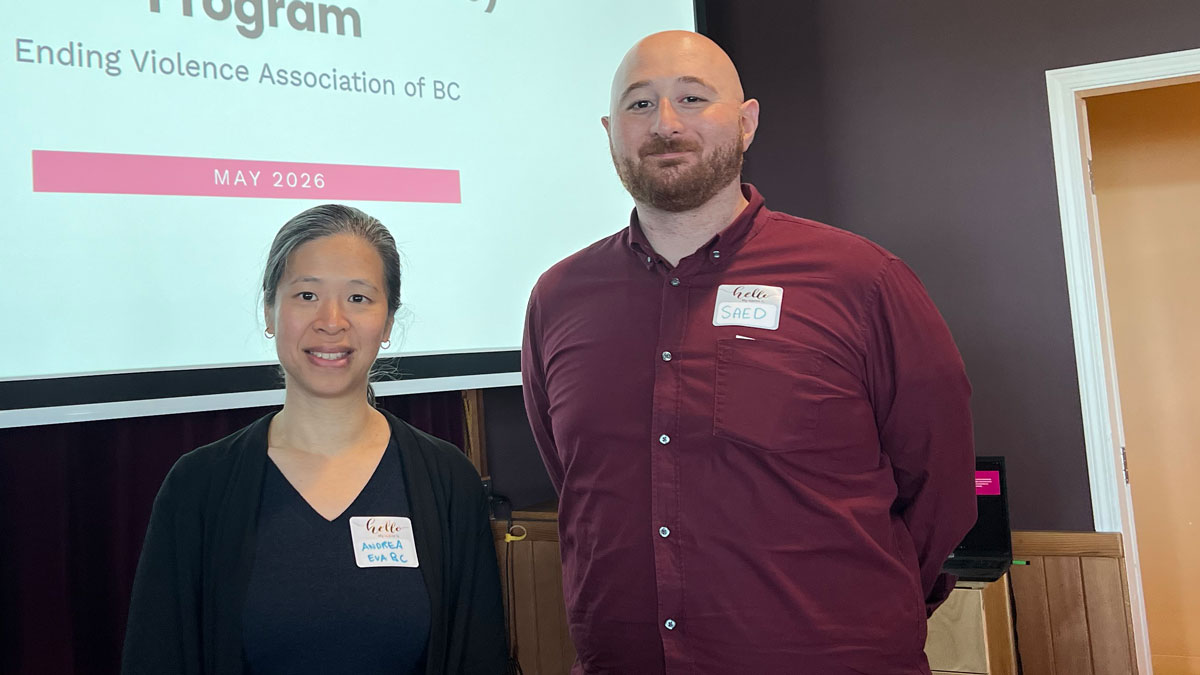
On May 21, Wendy Potter and Andrea Lam from EVA BC’s Community Coordination for Survivor Safety (CCSS) team joined a day of presentations at the City of Campbell River’s Maritime Heritage Centre on gender-based violence (GBV), hate-motivated violence (HMV), and radicalization leading to violence. The event was hosted by the City in partnership with the BC Ministry of Public Safety and Solicitor General’s (MPSSG)’s Collaborative Public Safety Programs.
Wendy and Andrea gave an overview of BC’s gender-based-violence (GBV) coordination initiatives including sexual violence coordination initiatives, Intimate Partner Violence (IPV) coordination committees, Interagency Case Assessment Teams (ICATs), and Third Party Reporting (TPR). Andrea says, “We were grateful for the opportunity to highlight the role of GBV coordination in increasing survivor safety, perpetrator accountability and access to services which ultimately makes our communities safer.”
Other session highlights included:
- An update from the Gender Equity Office on the BC government’s GBV Action Plan.
- An introduction to the Indigenous cultural cedar tree framework to reduce and prevent GBV by the Native Courtworker and Counselling Association of BC.
- The Shift Program and resources for countering radicalization to violence.
- A presentation from the Canada Centre for Community Engagement and Prevention of Violence on the rise in nihilistic violent extremism and risk to children and youth.
- The importance of collaboration, knowledge sharing and early intervention to prevent terrorism, extremism and hate crimes and the role of RCMP Integrated National Security Enforcement Teams (INSETs).
- An overview of the BC Hate Crime Unit and emerging trends in gender-based hate.
- Jason Sokolowski, a father who shared the story of his daughter, Penelope, who was targeted by unsafe and harmful people online.
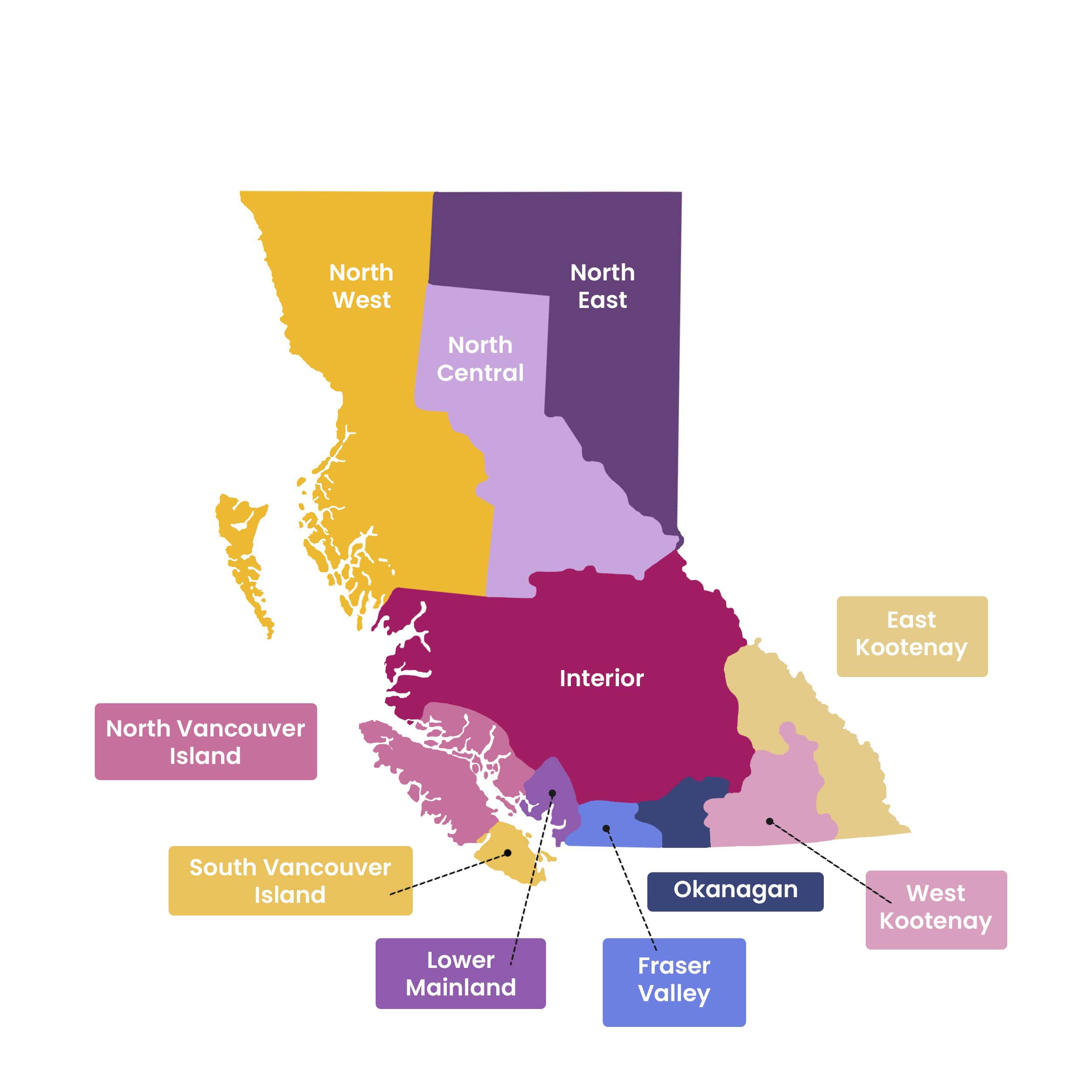
Participants from Vancouver Island included members of situation tables, Indigenous organizations, anti-violence agencies, provincial and municipal public service providers, police, health authority representatives and community partners.
The presenters discussed the intersections between these forms of violence, emerging trends, and prevention and response resources.
Andrea noted that gender-based violence and social media came up as common elements in all the types of violence discussed. “We’ve reached a point where there’s a greater recognition that intimate partner violence and sexual violence are not ‘just private matters’. All forms of gender-based violence have the potential to become public acts of violence. Technology has enabled the proliferation of harmful narratives that portray women and marginalized gender identities as threats and the ability to inflict harm anonymously and virtually has only increased the risk.”
The link between gender-based violence, violent extremism and mass casualties
“Gender inequality and violence are deeply rooted in our society. This is a crisis that must be addressed at all levels as it impacts public safety and national security. Our communities need to understand that the work of gender-based violence prevention requires collective action and commitment to address these behaviours before they grow into violent action.”
– Ninu Kang, Executive Director, EVA BC
Violent extremism and mass casualties are forms of misogyny that are on the same continuum as sexual assault, intimate partner violence and femicide. Kate Manne, associate professor at the Sage School of Philosophy at Cornell University defines misogyny as “social systems or environments where women face hostility and hatred because they’re women in a man’s world.” Most misogynistic behaviour is about using fear and violence to control women who violate patriarchal norms and expectations and aren’t serving male interests in the ways they are expected to.
The recent attack in Côte-des-Neiges, Montreal, resulted in the deaths of a community member and a police officer and has left families and communities grieving. Reports indicate that the shooter authored an ‘‘anti-women’ manifesto outlining misogynistic and anti-feminist extremist views. We recognize this investigation is ongoing, however these reported motivations are deeply concerning and reflect a growing pattern of male violence connected to misogyny and hate.
A 2026 Statistics Canada report found that there were 5475 police-reported mass casualty events between 2010 and 2024. The majority of persons (78%) accused of perpetrating mass casualty events were men and boys.
What we are seeing today echoes the findings from the Mass Casualty Commission following the 2020 mass shooting in Nova Scotia – where 22 people were murdered by one man. The Commission identified strong links between gender-based violence and mass casualty incidents:
- Many perpetrators have a history of gender-based violence including intimate partner violence, coercive control, sexual assault, stalking and harassment.
- Some mass casualties have been motivated by misogyny or by a belief that women don’t deserve respect, security or equality.
In addition to supporting survivors, at EVA BC, we believe that prevention through education and coordination are two of the most important tools available to address the systemic and cultural root causes of misogyny and gender-based violence.