This year at EVA BC we’re celebrating a milestone achievement: 25 years of the Community Coordination for Survivor Safety (CCSS) program!
Established in 2001 as the Community Coordination for Women’s Safety program, CCSS has been led by EVA BC to support and strengthen coordinated responses to gender-based violence (GBV) in BC. This work includes coordinating the provincial CCSS Working Group and strengthening community capacity building for GBV coordination through training and consultation, sector coordination, resource development, and policy analysis.
At the heart of this important work is the idea that coordination is key to improving survivor safety, an idea that predates the CCSS program and stems from a long history of feminist advocacy and leadership in Canada. For much of Canada’s history, violence against women was frequently treated as a private matter with responsibility often placed on women rather than on those using violence. During the 1970s, grassroots feminist advocates challenged these beliefs, drawing attention to the widespread nature of GBV and the limitations of existing institutional responses. The establishment of rape crisis centres and transition houses created spaces for advocacy, support, and safety while laying important groundwork for more coordinated responses to violence.
This foundational advocacy contributed to significant developments through the 1980s, 1990s, and early 2000s. One important development was the introduction of the Wife Assault Policy, now known as the Violence Against Women in Relationships/Violence in Relationships (VAWIR/VIR) Policy and last updated in 2010. The policy established expectations for a coordinated and integrated response to intimate partner violence (IPV) by the justice system and child welfare partners. Community-based anti-violence organizations played an important role in supporting the implementation of the policy, drawing on their direct experience working with survivors of GBV. This work contributed to ongoing policy and operational changes as legislation, practices, and community needs evolved.
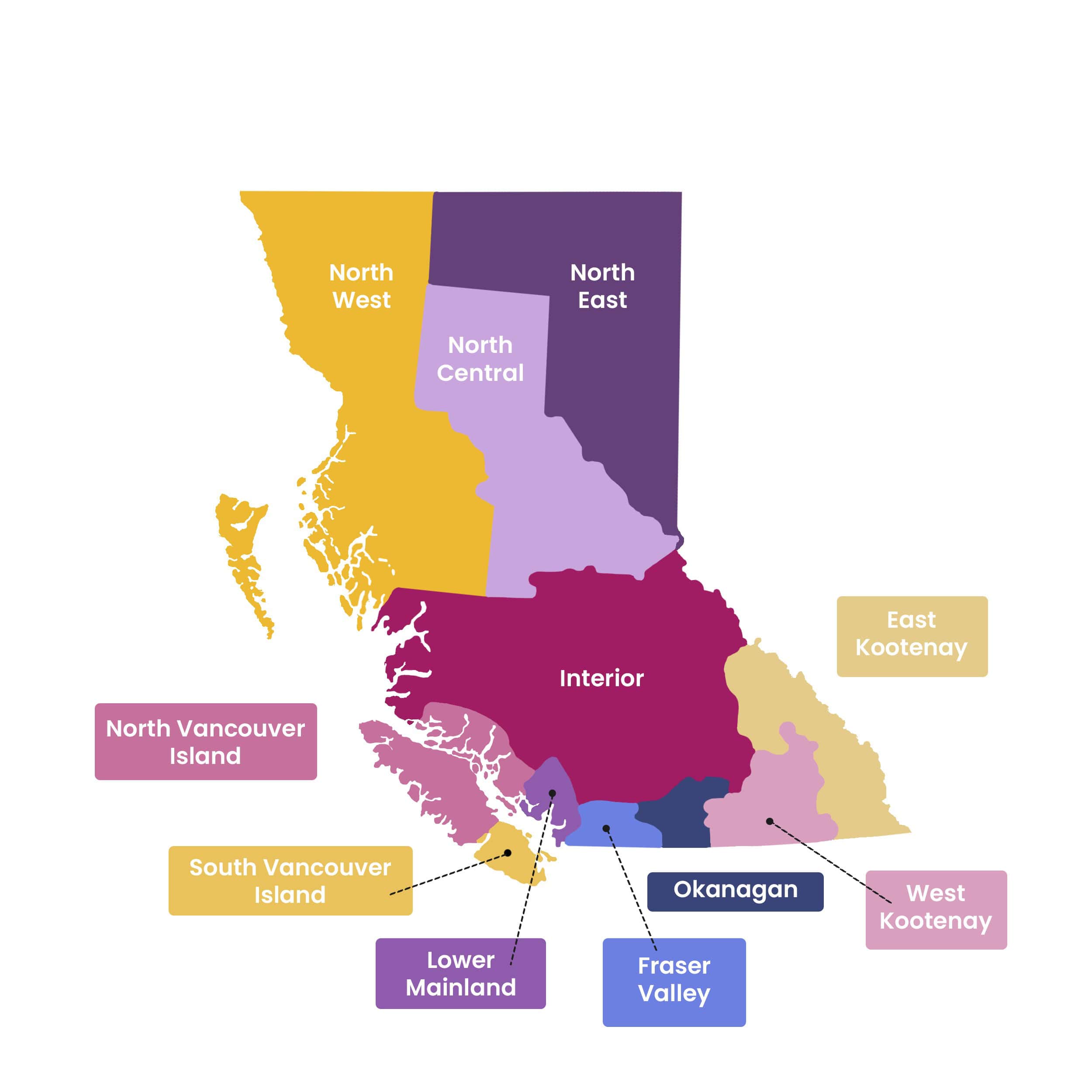
Fast forward to present day where the CCSS program is proud to continue this legacy of feminist work and support community capacity building and coordination through four key coordination initiatives in BC:
Local IPV coordination initiatives emerged following the implementation of the Wife Assault Policy in the 1980s and developed by communities throughout BC with support and leadership from the anti-violence sector. Now commonly known today as IPV Coordination Committees, these coordination initiatives identify and address local gaps in IPV services and supports by bringing together EVA BC member programs (Community-Based Victim Services, Sexual Assault Services, Stopping the Violence Counselling programs, Stopping the Violence Outreach programs and Multicultural Outreach programs), anti-violence workers (such as transition houses, second-stage transition houses, SAFE houses, and PEACE counsellors), and system partners (police and Police-Based Victim Services, child protection, corrections, healthcare, mental health and substance use, Indigenous organizations and representatives). EVA BC supports IPV coordination initiatives by way of training, consultation and operational support. Through relationship building, information sharing, and collaborative problem-solving, these committees support more connected community responses to IPV.
Sexual Assault Coordination Committees
Sexual assault coordination committees support and enhance services for sexual assault survivors by working toward better systems and community by identifying strengths and challenges in their community, and bringing together responders from anti-violence programs, Indigenous organizations, health/mental health services, school representatives and system partners. By building relationships across sectors, Sexual Assault Coordination committees support more connected pathways to services for survivors including medical care, emotional support, counselling, legal information and other community support through a survivor-centred lens.
Third Party Reporting (TPR)
TPR had been available in some BC communities since the 1980s but was formally established across the province by EVA BC and endorsed as a provincial protocol in 2008 through the Provincial TPR Work Team made up of representatives from the Vancouver Police Department, RCMP “E” Division, the BC Association of Municipal Chiefs of Police, and the BC Association of Chiefs of Police. The TPR protocol has continued to evolve, leading to the creation of a Provincial Police TPR Coordinator position at RCMP “E” Division in 2017 to support police agencies in ll police detachments to accept Third Party Reports and coordinate with Community-Based Victim Services to supporting survivors with TPR.
Interagency Case Assessment Teams (ICATs) are collaborative partnerships of local agencies, including community-based anti-violence programs, police, child protection, health, corrections and other agencies working in systems and communities. Since 2008, ICATs in BC bring together different perspectives and areas of expertise to support a more coordinated approach to identify highest risk cases of IPV and coordinate case management through legal and ethical sharing of risk-related information. Since 2013, CCSS was, and continues to be, instrumental in supporting best practices related to safety, privacy, and records management. Today, there are over 50 ICATs across BC actively working on the highest risk cases of IPV.
Community coordination support, training and advocacy
Beyond this critical coordination work, the CCSS team provides ongoing opportunities for learning, collaboration, and knowledge exchange between the anti-violence sector, community service providers and system partners (e.g., justice, health, child protection).
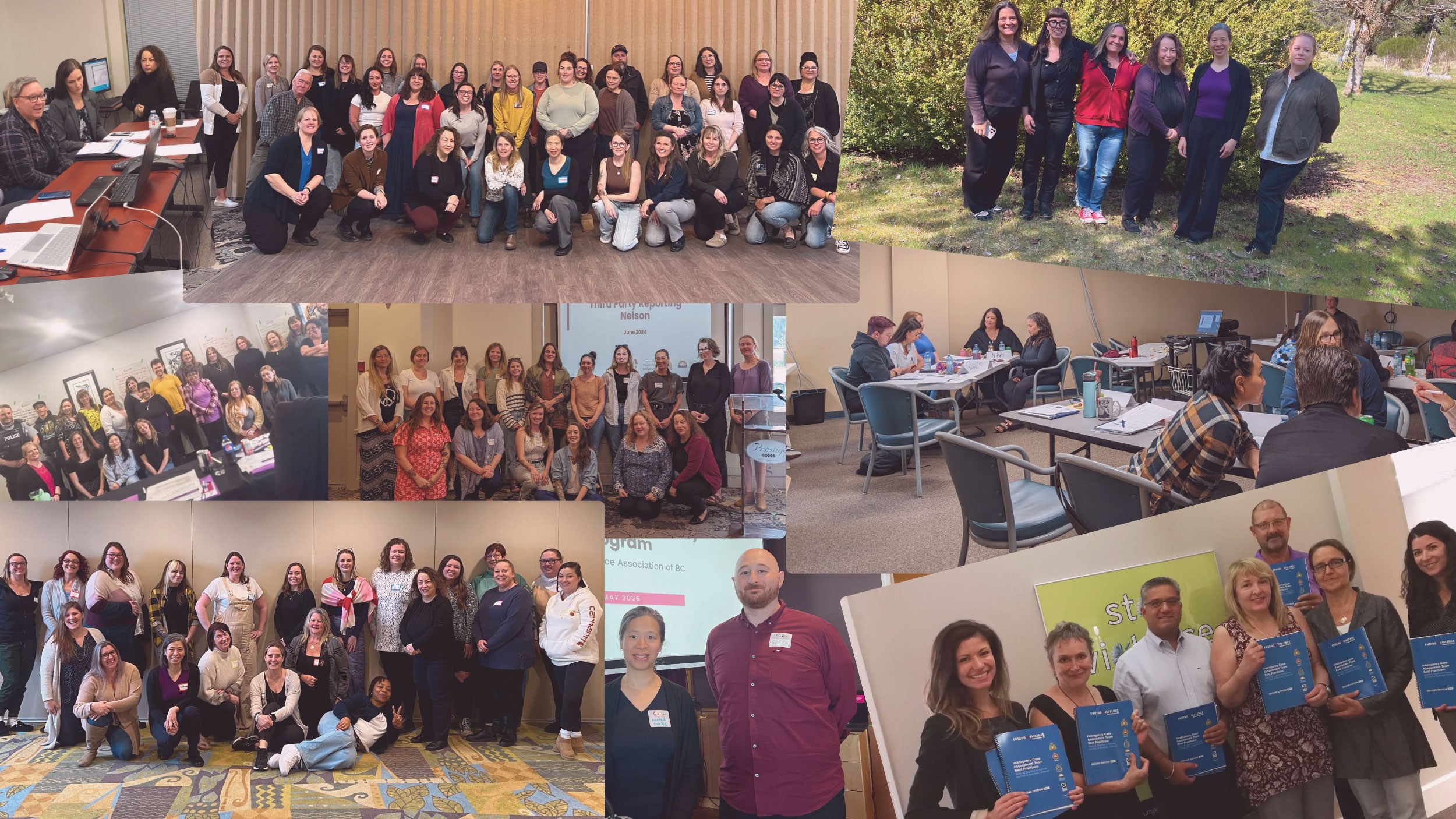
The CCSS program hosts three Communities of Practice (CoPs) focused on GBV Coordination, ICATs and TPR. It also delivers training in VAWIR/VIR coordination, Sexual Assault Coordination, TPR, Responding to Disclosures, ICAT, and GBV Community Coordination Leadership. Training is offered annually or by request through online sessions and community-based delivery.
The CCSS team also supports the Hope2Health Hub, a provincial resource for healthcare professionals and community-based sexual assault service providers, strengthening partnerships, collaboration, and action between the anti-violence and health sector.
In addition, the CCSS team produces the provincial ReachOut newsletter which highlights the work of EVA BC and the broader anti-violence sector by raising awareness, providing information, and encourages continued action on issues related to GBV in BC.
At the provincial level, the CCSS team chairs a bi-annual Provincial Working Group meeting that brings together representatives from provincial government ministries, provincial non-profit organizations, and senior levels of policing. The Working Group provides a space to identify challenges of policy and program implementation, and to discuss collaborative solutions to issues affecting responses to GBV. Crucial work has been accomplished related to issues involving mature minors, and the need to create an Intimate Partner Violence death review committee.
CCSS and the Future
For 25 years, the CCSS program has been part of a broader legacy of feminist advocacy, community leadership, and collective action to address GBV in BC.
This milestone is an opportunity to recognize the many community-based anti-violence organizations, Indigenous allies, systems partners, and the provincial government who contribute their knowledge, expertise, and commitment to strengthen responses to violence and help shape and sustain this work over the past 25 years. Meaningful coordination is built through relationships, shared responsibility, and a commitment to ongoing learning and change. As the needs of survivors and communities evolve, so too must the systems and partnerships that support them, and CCSS remains committed to advancing coordinated and effective responses that recognize victims and survivors’ diverse experiences, respect their autonomy, and support their safety.
CCSS will continue to advocate for provincial funding for the unpaid work of the anti-violence sector to lead provincial GBV coordination tables. Stable core funding for anti-violence organizations will strengthen their capacity to support survivors, prevent GBV and create safer communities.
For more information about GBV community coordination work in BC, visit the EVA BC website or contact the CCSS program at ccss@endingviolence.org.