Carolina Rondeau works as a Family Mediator and Indigenous Family Justice Support Worker at Sasamans Society in Campbell River. She shared this story of their work with us.
When Sasamans Society’s Indigenous Family Justice Support Program began in July 2025, many families came forward looking for help with family law, separation, parenting arrangements, court forms, legal aid, and child welfare processes. But the early months of the program revealed something important: many family justice concerns were also safety concerns.
In March 2026, after seeing how often intimate partner violence (IPV), coercive control, and family violence were present beneath the surface of court-related requests, Sasamans strengthened the program’s focus on gender-based violence.
Carolina shares the story of one case that demonstrates what they were seeing and how they support clients experiencing IPV. A woman (a mother) was referred to Sasamans from a Native Courtworker who was looking for help with a court process and financial assistance. The client wanted a divorce due to family violence and needed support understanding what steps to take. As the worker listened, it became clear that this was not only a legal matter. The woman had experienced IPV for several years. She was afraid of her former partner’s escalating behaviour, and her young child had been exposed to repeated conflict and violence in the home.
The child was also being harmed. He had been present during altercations and had been drawn into the conflict in ways that made him a quiet victim of the family violence.
“Our first response was not paperwork,” says Carolina. “It was safety.”
In her role as an Indigenous Family Justice Support Worker, Carolina began with safety planning: she helped the woman think through where she and the child could go if they were unsafe, what steps were needed to reduce risk, and what court protections might be available. From there, she supported her with the process to seek a protection order for herself and her child.
Once the protection order was granted, the focus expanded from immediate safety to stability. “We connected the mother with Sasamans’ Parenting Support Program, which helped with childcare registration and practical supports so she could begin rebuilding daily routines and regain independence.” They also applied Jordan’s Principle support to help address her child’s needs and reduce financial pressure on the family.
When they were safer and more settled, Carolina helped her apply for legal aid so she could continue the family court process with legal representation. Carolina remained connected as a support to both the woman, and, where appropriate, with the legal process, helping the woman feel less alone and better prepared.
Sasamans’ involvement didn’t end there. Later, when the family raised a child welfare concern involving the only caregiver that the mom could trust, Sasamans’ Indigenous Outreach Family Navigator worked with Carolina to support her together. “The concern was ultimately closed, but without support the process could have been overwhelming and frightening,” says Carolina. For IPV survivors, systems themselves can sometimes become another place where they experience fear, conflict, and loss of control. Having someone beside her helped the woman feel heard, guided, and protected.
Carolina explains how this case showed why having a IPV lens matters: “A family may enter through the door with a divorce, court forms, or parenting arrangements, but the real need may include safety planning, child protection, childcare, financial support, legal aid, emotional support, and connection to culture and community.”
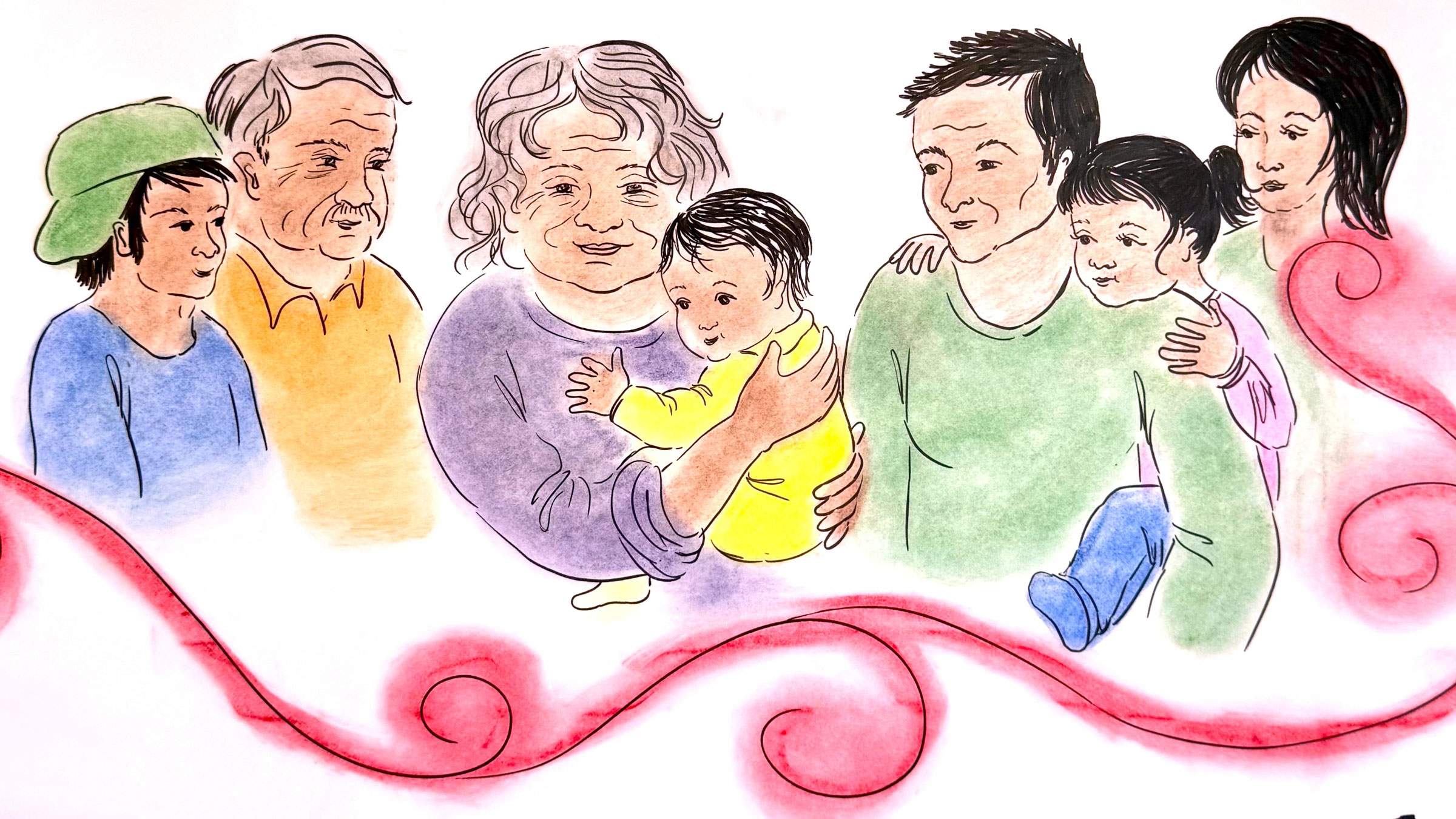
At Sasamans, the woman did not have to carry each part of the story alone. A circle formed around her and her child: family justice support, parenting support, Jordan’s Principle, family navigation, legal aid connection, and ongoing advocacy.
Carolina sums it up: “The outcome was more than a court step. It was a mother who felt heard. A child who was seen. A safety plan created. A protection order put in place. Connections to practical supports. And a family beginning to move from fear toward stability.”
The Sasamans’ holistic approach gives families experiencing IPV access to wrap around culturally safe services in one place.
The Sasamans team continues to build relationships with decision-makers, systems and service providers and spread the message of their work that is one of strengthening children and families and responding to the community’s needs.
See more in Sasamans Society’s 2025-2026 Annual Report.
“What stands out is the power of relationships between staff, youth, families, Elders, and community partners. Every connection, every shared story, and every act of collaboration brings us closer to our vision: a community where Indigenous children, youth, families and Elders are supported, heard, and celebrated.”
Sasamans Society Executive Director, Lori Bull
See more about Sasamans Society’s services.